Few writers understood the conflicts of the British upper class like E.M. Forster. Without glorifying the inexplicable luxuries and opportunities, he managed to dig into the psychological weight of a culture that was expanding its potential throughout the 21st century. It was moving away from a more pioneering generation into one that had to grapple with its place alongside the changing rights of those around them. In "Howards End," he takes things closer to home by focusing on the complications of who gets to own the titular house. For what could've been a prolonged auctioneering tale turns into an emotional study of the haves and have-nots, including what it means to have a sense of safety. With the familiar with and charm, he captures characters of different generations and ideologies coming together to reflect, often humorously, on a society that cannot see eye to eye. In a career full of masterpieces, this one stands out for its simplicity and maturity, finding decades of observations coming together in one profound and timeless thesis.
Sunday, April 26, 2026
Thursday, November 20, 2025
#187. "Doctor Zhivago" by Boris Pasternak
The general consensus around Russia is that it's a cold and desolate place. While there's a rich culture, there's often a need to focus on the weather, of which can be an unforgiving landscape that swallows those unprepared whole. For Boris Pasternak, it's also a place to find hope. In "Doctor Zhivago," he explores the life of a doctor who is surrounded by misery during the time of war. He deals with the revolutionaries who wish to present a new and more idealistic world. They quote the literary giants of the past, looking for direction on the way forward. Even if the titular Zhivago cannot lead, he's doing more than enough to keep the cause alive. The question eventually comes whether he could find something for himself to live for. That's what leads to one of the most bittersweet romances of the 20th century, portraying a world of hope and sacrifice, while also acknowledging that not everything is fair. This is a story that will make hearts flutter, but also make them sink. It's a profound journey unlike any other in the literary world.
#186. "Play It As It Lays" by Joan Didion
Like the characters at the center of Joan Didion's sparse novel "Play It As It Lays," this story is a narrative gamble. With everyone's lives spiraling out of control, this is a study of characters who are never understood lower than a surface level. Whereas most would get lost in the winding trail of interiority, Didion's fascination is more about the immediate response, relying on paragraphs that are at times so zippy that they tempt the reader to miss hidden details. This is a world where shocking detail happens in mundane prose, and introspection doesn't always reveal itself beyond the immediate action being performed. What it lacks in depth it more than makes up for in a go-for-broke immediacy that makes for an entertaining read. It may result in the reader asking what just transpired, but hopefully the interpretation of the prior pages will be enough to make this playful exercise worth the gambit.
#185. "Brave New World" by Aldous Huxley
Among the echelon of fantasy that feels like an all-too-real portrait of the modern age is Aldous Huxley's satirical ride "Brave New World." Unlike the more piercing nature of "1984," Huxley is more fixated on a comic read of a culture that has been designed for nonstop pleasure. Everything becomes so accessible that the very concept of sex seems absurd, where even the birthing process has lost its sentimentality in favor of nonstop excess. Even in the quest for a titular brave new world, the people in charge of that journey don't have the wherewithal to make it better. Is everyone doomed to be distracted by debauchery as worse behavior becomes accepted, or will something change for the better? In short, the answer is like all satires and exists somewhere amid the humor.
#184. "A Supposedly Fun Thing That I'll Never Do Again" by David Foster Wallace
Throughout the 1990s, few authors sought to redesign the literary language quite like David Foster Wallace. Along with his maximalist magnum opus, he was a regular culture critic known for his detailed essays that pushed far beyond the page and into the footnotes. Nowhere is this clearer than in his essay collection "A Supposedly Fun Thing I'll Never Do Again," which finds him interweaving the hot topics of the day along with personal perspectives that turn academia into an accessible and sometimes emotion-driven art form. One doesn't need to be a fan of tennis, state fairs, or David Lynch to appreciate what Wallace has created. It's such a succinct look at what drove the writer that it becomes one of the essential portraits of a period in American history that was both full of ambition and farce. In some ways, these essays surpass his fiction, introducing a new way to think of the world, even if there's things about it that he doesn't care for.
Monday, June 16, 2025
#183. "The Moviegoer" by Walker Percy
There ain't no city quite like New Orleans. Few authors knew that as well as Walker Percy. In his novel "The Moviegoer," he turns acts as simple as walking down the street into a colorful collage of figures who are trying to make the most of their own eccentric situations. Compared to most novels, the plot is sparse and at times meandering. However, the slice of life nature allows for a deeper introspection that allows for humor to clash with dread in a way that subverts expectations. In the Big Easy, it's fun to see someone who looks to be having a good time but somewhere deep inside is missing an element that could make him more satisfied.
#182. "American Pastoral" by Philip Roth
Even decades later, it's difficult for America to fully escape the image of its former glory. The protagonist of Philip Roth's "American Pastoral" is the ideal citizen. He did everything right. He was a renowned high school athlete who married the prom queen. Everything was working in his favor, down to his career focusing on assembling gloves. If this were the 1950s, there's a good chance that this would be the picture-perfect vision of a happy life. However, there is one caveat to his image. His daughter is an anarchist who defies the definition of patriotism. Over the couse of a taught little novel, Roth finds the deeper meaning of the American dream and how the image of post-war suburbia isn't what it seems. Somewhere in the happy faces is a reality that's hard to fully explain. By the 1960s, America was at a crossroads, and the youth were ready to fight back. Who will win? Who is right?
#181. "The Haunting of Hill House" by Shirley Jackson
Few authors knew how to write tension as well as Shirley Jackson. There is a level of trust she forms with her readers that causes them to lean forward and read with morbid curiosity the exploits of her characters suffering from their own strange ailments. They are tragic, but more importantly, they are familiar. The motivations are those of everyday dysfunction, and in he case of "The Haunting of Hill House," she outdoes herself by finding the perfect balance between interior and external dread. A visit to a house with an ever-changing layout results in moments of hallucination and fear that escape the melodramatic texture it suggests. By the end, the reader feels as connected to the characters as they are to the building they inhabit, maybe even causing them to question their own floor plan and experience their own optical shenanigans.
#180. "Holly" by Stephen King
For half a century, Stephen King has been considered the master of horror. His novels delve into the darkest recesses of the human imagination to find amusement. But what happens when reality far exceeds the potential for fiction? In "Holly," King finds himself digging into an era of American history that feels stranger than any character he's created. With the pandemic fresh in people's minds, the story follows a murder mystery full of the hallmarks that many readers will know well. There's social distancing, people rebelling against mandates, and just a sense of humanity turning on itself. While it's a story that was met with immediate controversy, there's still plenty of spark left in the old master to present a narrative that may not be among his best, but has a liveliness worthy of his legacy.
Monday, January 13, 2025
#179. "Loon Lake" by E.L. Doctorow
Over the course of his career, E.L. Doctorow did an impeccable job of turning history into fodder for great drama. In the case of "Loon Lake," he takes a collage approach that features him jump through literary styles in the hopes of understanding the lives of chaacters defined by their criminality. With everyone centered around a lakeside cabin on "Loon Lake," they try to survive the moral panic without things spiraling out of control. The results are an entertaining look into early 20th century Americana and a deconstruction of nostalgia that finds the dark truths floating to the surface, creating an understanding of innocence lost that can only be achieved when one learns to let go.
#178. "Paradiso" by Dante Alighieri
The concluding chapter of Dante Aligheiri's "The Divine Comedy" is both the most practical but also the most impenetrable. Following the journeys through the "Inferno" and "Purgatorio," his final stop finds him taking a leap into the heavens. In this case, it's a journey through space as he sees celestial bodies that force him to use his most creative descriptions. Whereas the prior entries can be chalked up to recognizable iconography, this is a chance to exist among the stars, citing religious figures and virtues. This is his most optimistic and passionate, but it's also the most ellusive. For those more attracted to a spiritual realm, this poem may resonate more. For everybody else, there is this odd sense of detail and cryptic meaning that is compelling to read, but ultimately ends with the strangest happy ending of ancient literature.
#177. "Purgatorio" by Dante Alighieri
When readers last saw Dante Alighieri, he had written the fictitious masterpiece "Inferno." Having traveled through hell, he now finds himself at the middle chapter of his acclaimed "The Divine Comedy." On his journey to paradise, he must first stop over in purgatory and resist an endless array of temptations. Much like his previous entry, there is an emphasis on circular designs and the number nine. A lot of the stanzas favor this structure, allowing a journey that feels rigid and purposeful as Dante travels upwards towards the skies while discovering the familiar row of conflicts that he had met throughout "Inferno." The major difference this time is that there's more temptations less defined by sins and more earthly passions. While "Inferno" has garnered its reputation as the most popular poem, "Purgatorio" deserves consideration for pushing the boundaries even further, creating an experience that is more speculative and, most of all, optimistic. It's a story about the grand beauty of life, and this is secretly the most exciting chapter.
#176. "Heaven" by V.C. Andrews
Among the young heroines of V.C. Andrews' novels, few are as curious as Heaven Casteel. She starts the story an outcast in her society for no other reason than her financial status. Living on the dirty edges of town, she does her best to keep her family afloat without losing the respect of her peers. The issue is that as a young girl, she's unable to have a larger influence over her own trajectory in life. The results feature the patented run of twists, finding the reader leaning forward and wondering what will happen next. While the latter half fails to capture the intensity of the early run, there's still enough here for fans of the morbid, desperately searching for the moment when Heaven's life will break free of its torment and give her a sigh of relief. If the best that can be said about "Heaven" is that the reader will have no plausible way of predicting where the story ends after a few pages, then this ranks as another success.
#175. "Ducks, Newburyport" by Lucy Ellmann
Nobody has captured the direction that modern America has headed in quite like Lucy Ellmann. While many would argue there is this need for a grandiose political allegory of power corrupting, her approach is something a lot more in tune with the moment "Duck, Newburyport" is a firecracker of a novel that transcends the need for conventional narrative structure and instead uses a freeform look into the mind of a midwest housewife in an effort to understand the distracted nature by which many live their lives. With an endless array of information being thrown at us on any given day, it' hard to make a novel that perfectly encapsulates the madness of living in America in the late 2010s. For its many flaws, Ellmann has done the next best thing. She has created a perfect exploration of anxiety and self-actualization existing alongside each other, often within the same thought, as she removes the rigidity of language and replaces it with a breakneck speed. Can a life be perfectly embodied in a single sentence? In truth, it's near impossible. However, she achieves the next best thing.
#174. "On Chesil Beach" by Ian McEwan
The average married couple tends to spend their early days in bliss. However, the protagonists of Ian McEwan's "On Chesil Beach" find themselves in quite the bind. Every effort to become intimate backfires, eventually leading to a question as to whether they love each other on a deeper level. With a fast-paced story that takes place over a matter of days, McEwan captures the small moments of being lost in doubt and disconnect from the life that one envisions. It's a compelling if slight reading experience that finds audiences not only coming to understand the complexities of an individual's personal drives, but also how love shows itself sometimes in unpredictable ways.
Sunday, December 1, 2024
#173. "O Pioneers" by Willa Cather
When most stories about the Midwest pop up, they're usually of the triumphant cowboys who fight bad guys and save desert towns. For as fun as the western genre is, it isn't a complete portrait of America as it evolved over the 19th century. Willa Cather knows this better than anyone and produced a handful of fiction that perfectly captured the joys of smalltown life. In a Nordic community inhabited in the norther corners of the Midwest, the story unfolds with a simple view of a world that was starting to take shape. Every small innovation is complimented by traditions and community that build something endearing and sweet along the way. It's in these small, episodic encounters that life happens. As a result, it's one of the purest, more enduring portraits that American fiction has produced.
#172. "Heart of Darkness" by Joseph Conrad
As centuries have carried on, the topic of colonization becomes more widely discussed. At the time of Joseph Conrad's publication of his timelesss novel "Heart of Darkness," European authors romanticized the weary traveler. These were men who helped to exoticize worlds different from their regal lifestyle. While Conrad's contribution seems like the same as usual, what he ends up creating is one of the greatest indictments of colonization that fiction had seen. With a protagonist who continually insults the residents of the jungle communities he inhabits, there is a sense of disgust in even being there. Despite being the outsider, the efforts to make him the expert only reflect how lacking the nature of assumptions are. With a third act that finds white guilt and isolation taking a toll on a supporting character, everything comes together in a radical, stunning fashion that shows the heart of a cruel man who ends not with understanding but with even more disconnect than what he went in with.
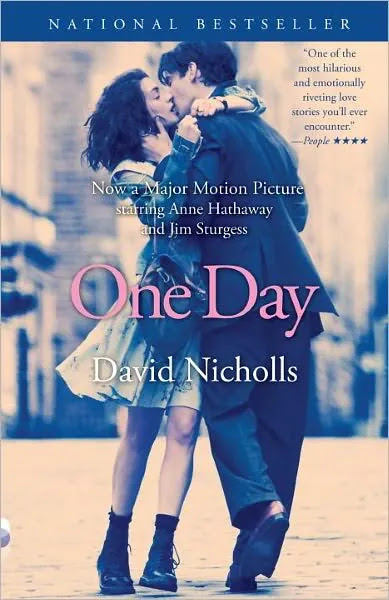
#171. "One Day" by David Nicholls
Few romance novels have a gimmick as brilliant as David Nicholls' "One Day." In an effort to understand a relationship through minimalist details, he chooses to explore how a couple reunite once a year to figure out where they are in life. What starts as bright-eyed youths with their own aspirations slowly evolves into different career paths. While later chapters feature them not interacting at all, the early run is some of the finest explorations of the optimism of love and how brilliant everything seems at the offset. With the shift of each decade (both of characters and time) comes new challenges to the novel. New worldviews form and the concept of desire shifts slightly. Can love sustain the struggles of time, or is everything doomed to be forgotten? Certain people remain pivotal to personal growth. Time moves on, but the memories don't. This novel is nostalgic and glossy without resorting to kitsch. Instead, it feels raw, honest, and likely to leave the reader contemplative of their own relationships.
#170. "Sharp Objects" by Gillian Flynn
One of the greatest gifts that Gillian Flynn has a writer is knowing how to make the nasty appealing. In one of her earliest novels, "Sharp Objects" reflects a woman's complicated journey with family whose tensions are resurrected when she's forced to return to her hometown. Despite being an investigative reporter who is used to difficult subject matters, there is something about this particular case that bothers her on a deep level. It could be because of how it drags up unhealthy coping behaviors as harsh comments lead her to potentially relapse. As everything falls apart, the novel becomes of the most perplexing views of self-harm that 21st century fiction has provided. Even in its sensationalized approach, Flynn doesn't romanticize the condition. Instead it becomes a character study that takes familiar tropes and makes for a pulpy page-turner that does enough right to foreshadow one of fiction's most impressive young careers to date.
#169. "The Handmaid's Tale" by Margaret Atwood
For generations now, Margaret Atwood's seminal novel "The Handmaid's Tale" has been considered haunting less because of what it says but more what it predicts. In a dystopian future, women have become second-class citizens and are forced to wear restrictive clothing as their homelife becomes a prison. The inability to express oneself outside the maternal roles has resonated with many who find the subtext to be more than allusions. Given her history of feminist criticism, Atwood's most popular work remains vital. The darkness is sure to cause a goosebump or two. Even then, it's not without some levity as characters find humor in their increasingly mundane lives, doing everything to stave off insanity. The results are a powerful cautionary story that encourages the reader to be aware of the world around them, questioning whether the slow decline into oppression can be attributed to their neutrality or if the collective system was always a bit hopeless to a few evil powers.
Subscribe to:
Posts (Atom)